


Table of Contents
- Understanding the Basics of Matching Earrings and Necklaces
- Matching Gold and Silver Jewelry Together
- How to Coordinate Jewelry With an Outfit
- Statement Earrings and Necklace Combinations
- Jewelry for Different Necklines
- Avoiding an Over-Accessorized Look
- Building Your Jewelry Collection With Creme Caramel
- Frequently Asked Questions
Last Updated: October 25, 2026
Understanding the Basics of Matching Earrings and Necklaces
Learning to match earrings and necklaces is one of the easiest ways to create a polished, intentional look. The key is balance: when you match earrings and necklace thoughtfully, you create visual harmony rather than chaos.
Think of your jewelry as a conversation. If your necklace is bold, your earrings should step back; if it's delicate, your earrings can take center stage.
At Creme Caramel, we handpicked our collections to work together seamlessly, so you can match earrings and necklace without overthinking it.
Here are the core principles:
- Metal consistency matters, gold with gold, silver with silver, or intentionally mixed.
- Scale and proportion, balance statement pieces with delicate ones.
- Color coordination, consider the undertones of your metals and gemstones.
- Occasion alignment, formal events call for refined pairings, casual days allow playful mixing.
- Personal style, your comfort with bold or minimal jewelry shapes your choices.
The goal isn't perfection. It's creating a look that feels like you.
Matching Gold and Silver Jewelry Together
Mixed metals used to feel like a rule you couldn't break. Modern styling now embraces mixed metals when done with intention.
Treat them as complementary rather than competing. Gold reads warm and luxe, silver reads cool and modern, and pairing them creates visual interest through contrast.
Here's how to make it work:
- Use a bridge piece, wear both metals in the same piece (a necklace with mixed metal chains, for example) to create visual connection.
- Separate by placement, put gold on top (earrings) and silver on bottom (bracelet), or vice versa.
- Match the occasion, formal events work best with one consistent metal; casual outfits give you freedom to mix.
- Consider your skin tone, warm skin tones often shine with gold; cool skin tones favor silver; neutral skin tones can wear either.
The real rule: if it feels intentional to you, it works. Hesitation shows. Confidence sells the look.
How to Coordinate Jewelry With an Outfit
Your jewelry lives within your outfit.
Start with your outfit's dominant feature, whether neckline, color, or texture, and let your jewelry echo or balance it.
For example, a busy patterned top calls for simple, refined jewelry. A solid-color top gives you freedom to wear something more decorative.
Consider also the formality of your outfit. A casual tee and jeans asks for understated jewelry.
You can also accessorize a handbag with jewelry to extend your coordination principles to bags, creating a fully integrated look.
Statement Earrings and Necklace Combinations
Statement pieces are the jewelry equivalent of a bold color or pattern. When wearing statement earrings and a necklace together, one must lead.
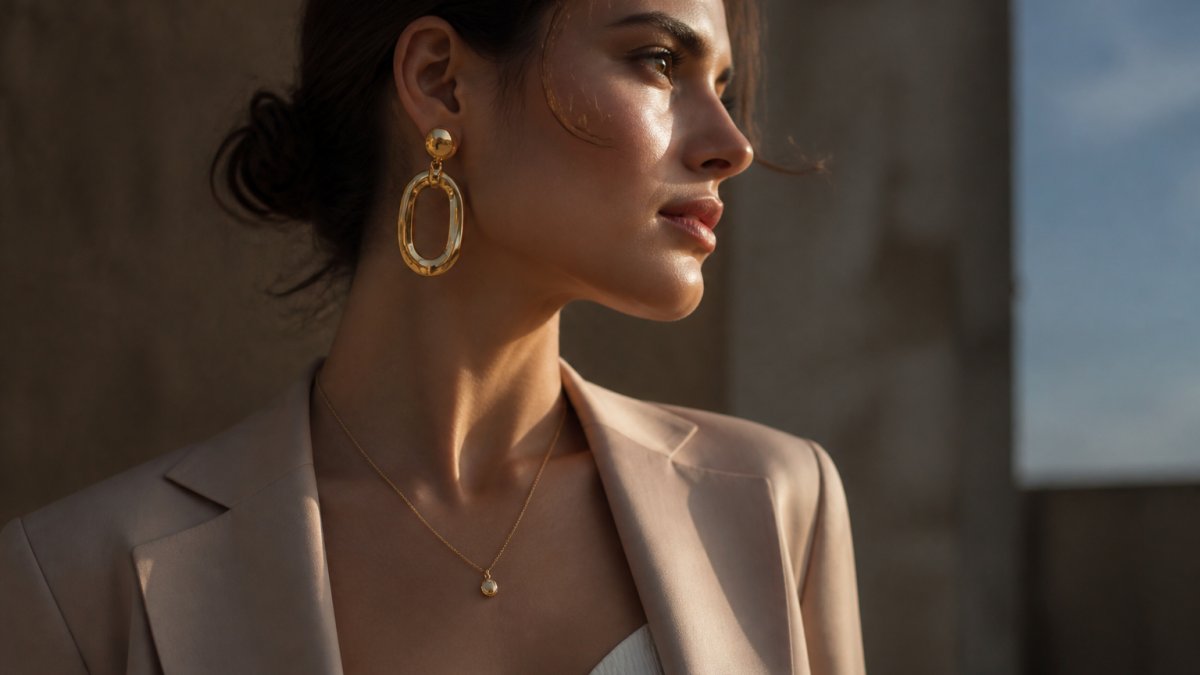
The rule: match earrings and necklace by giving each piece a clear role, letting one star and the other support.
If your necklace is the statement (chunky chain, bold pendant, layered design), choose simple earrings like studs or small hoops.
Our Montreal Set Earrings and Necklace demonstrates this balance perfectly.

The Dublin Clover Set Necklace & Earrings works the same way: the five-leaf clover pendant draws attention while the matching earrings repeat the motif at a smaller scale, creating harmony without redundancy.

For those seeking ready-made coordination, the Paris Set Earrings, Bracelet & Necklace offers a complete solution.

Jewelry for Different Necklines
Your neckline is the frame your jewelry sits inside. Necklines create lines (horizontal, vertical, curved) and open or close space, so your earrings and necklace should either echo those lines or balance the open space.
To test any pairing, stand at arm's length from a mirror and ask: does the necklace sit on skin or fabric? Does the earring length stop above, at, or below the jawline? Does the shape repeat the neckline or contrast it? If two answers feel busy, remove one piece.
High and Crew Necklines
High necklines and crew necks close the neck area with a strong horizontal line at the collarbone. Long pendants disappear into fabric or create an awkward vertical break, so choose short chains (roughly 40-45 cm) that sit at the neckline edge.
Because the neck is covered, earrings carry the jewelry story. Drop earrings, large hoops, and chandelier styles work well because they occupy the open space beside the jaw rather than competing with fabric. If you prefer a necklace, choose a short, structured piece that sits above the neckline rather than dangling over it.
V-Necklines and Scoop Necklines
V-necks and scoop necks create open vertical or curved space. A pendant that follows the depth of the V looks integrated; one that stops short looks accidental.
With a longer necklace doing the work, keep earrings refined: small studs, short drops, or delicate hoops. The goal is complementary, not identical. If the necklace has a strong geometric pendant, choose earrings with a softer curve, and vice versa.
Off-Shoulder and Strapless Styles
Off-shoulder and strapless necklines expose the collarbone and shoulders, creating a wide horizontal line. Short necklaces (chokers and 40-45 cm chains) sit on exposed skin and read as deliberate; longer necklaces feel unanchored without a fabric edge to frame them.
Earrings can be bolder here because the exposed shoulders balance visual weight. Medium to large earrings work, but keep the necklace and earrings from competing for the same horizontal zone. If the necklace is wide or layered, choose earrings that hang below the jawline rather than spreading outward.
Paris Set Earrings , Bracelet & Necklace →
Halter and One-Shoulder Necklines
Halter necklines create a strong V or Y shape at the front and leave the shoulders bare. A short pendant or a fine chain that follows the halter line works; a wide collar necklace usually clashes with the straps. One-shoulder necklines are asymmetrical, so keep jewelry balanced: a single statement earring on the bare side or a simple stud on both sides, with a delicate necklace that does not repeat the asymmetry.
A Quick Neckline-to-Jewelry Check
- Crew or high neck: short chain or no necklace; statement earrings.
- V-neck or scoop: pendant necklace that lands inside the opening; refined earrings.
- Off-shoulder or strapless: choker or short chain; medium-to-large earrings.
- Halter: fine chain or small pendant; studs or short drops.
- One-shoulder: keep jewelry symmetrical or intentionally single-sided.
These are starting points, not laws. Body proportions, hair length, and the fabric weight of the garment all shift the balance. The reliable method is to check the mirror test: if the necklace and earrings both demand attention in the same zone, let one step back.
Choose necklace length and earring style based on your neckline to create visual harmony.
| Neckline Type | | --- | --- | --- | | Crew or high neck | 40-45 cm | Statement earrings | | V-neck or scoop | 50-60 cm | Refined studs, short drops, delicate hoops | | Off-shoulder or strapless | Choker or 40-45 cm | Medium to large earrings | | Halter | Short pendant or fine chain | Studs or short drops | | One-shoulder | Delicate, symmetrical necklace | Symmetrical or intentionally single-sided |
Avoiding an Over-Accessorized Look
Over-accessorizing is rarely about too many pieces; it's about too many pieces competing for the same visual job. Two bold earrings and a bold necklace can feel chaotic, while five delicate pieces can read as calm. The useful question isn't "how many?" but "what is each piece doing?"
A practical framework is to assign roles before you put anything on:
- Anchor: the piece that sets the metal, mood, or color story (often the necklace or the earrings).
- Echo: a piece that repeats a shape, texture, or tone from the anchor at a smaller scale.
- Accent: an optional piece that adds contrast without repeating the anchor.
If two pieces both want to be the anchor, you have a conflict. Remove one or shrink one. This is why a statement necklace with statement earrings feels heavy even when both are beautiful on their own.
The Three Tests
1. The arm's-length test. Step back from the mirror. If you cannot tell which piece is the focal point within a second, the look is competing with itself. Choose one piece to lead and simplify the rest.
2. The neckline test. Covered necklines (crew, turtleneck, high collar) already fill the neck area. Adding a long necklace and large earrings creates three visual events in one zone.
3. The movement test. Turn your head and shoulders. If earrings and necklace tangle, click, or catch on fabric, the combination is impractical regardless of how it looks in a static photo.
Metal and Color Discipline
Mixed metals work best when intentional and limited. Use one dominant metal and one secondary metal appearing in a small area such as a clasp, a single ring, or a thin chain; three or more metals in similar visual weight usually read as accidental.
The same logic applies to color. If your outfit already has a strong color or pattern, keep jewelry in one metal tone and avoid multiple gemstone colors. If the outfit is neutral, you have more room for a color accent, but one accent is usually enough.
Proportion and Scale
Scale is relative to your frame and your outfit. A chunky chain that looks balanced on a heavy knit can overwhelm a silk blouse. A delicate chain that disappears on a textured coat can look lost.
Earring length also matters. Earrings that stop at the jawline draw attention to the jaw; earrings that drop below the jawline elongate the neck. If you are already wearing a necklace that creates a vertical line, very long earrings can double the effect and feel busy.
A Simple Editing Routine
Before leaving the mirror, remove one piece and see if the look improves. Most people find that the version with one fewer piece feels more intentional. If removing a piece makes the look feel incomplete, put it back; that piece was earning its place.
Over-accessorizing is not a fixed number. It is the moment when pieces stop supporting each other and start competing. Assign roles, run the three tests, and edit until each piece has a job.
Building Your Jewelry Collection With Creme Caramel
A thoughtful jewelry collection makes match earrings necklace combinations feel effortless, because you're choosing from pieces that already work together.
Start with basics: simple gold studs, delicate gold chains, and small gold hoops form a foundation that works with almost everything.
Add one or two statement pieces. A bold pendant or chandelier earrings give you options for days when you want to make a visual impact.
Then build around your personal style. If you love minimalism, add refined pieces in consistent metals.
Creme Caramel's city-named collections make this easier. Each set is designed to work together, eliminating guesswork.
Coordinated sets aren't just individual pieces; they build a collection where everything naturally complements each other, so you always have something that works.
The most polished looks come from intention, not accident. Explore how to accessorize a handbag with jewelry to extend these coordination principles across your entire accessory wardrobe.
Frequently Asked Questions
Should your earrings and necklace be the same metal?
Not necessarily. While matching metals creates a polished, cohesive look, you can absolutely mix gold and silver jewelry if you do it intentionally. The key is balance; if your necklace is gold, choose earrings in the same metal for a classic approach, or mix them with confidence by ensuring both pieces feel intentional rather than accidental. Mixing metals works best when the styles complement each other in weight and visual impact.
Can you wear statement earrings with a necklace?
Yes, but one piece should be the focal point. If you wear statement earrings with bold details, pair them with a delicate or minimal necklace to avoid overwhelming your look. Conversely, a statement necklace pairs beautifully with simple, understated earrings. This creates visual balance and ensures your jewelry coordinates rather than competes for attention.
What earrings go best with a statement necklace?
Pair a statement necklace with simple studs or small drop earrings. Since the necklace draws attention to your neck and chest, delicate earrings keep focus there without creating visual clutter. Choose earrings in a complementary metal or style; if your statement necklace is gold-plated with geometric shapes, simple gold studs or small hoops work perfectly.
How do you avoid wearing too much jewelry at once?
Follow the 'one statement piece' rule: choose either bold earrings or a bold necklace, then keep other pieces minimal. If both your earrings and necklace are delicate, you can wear them together without looking over-accessorized. Consider your outfit's neckline and fabric too; simpler outfits can handle more jewelry, while busy patterns or high necklines call for restraint.


