


Last Updated: November 19, 2026
Quick Summary
Fasten every clasp, then coil each of your short necklaces loosely on its own and seal it in an individual pouch so nothing touches anything else. For fine chains with small pendants, thread the chain through a wide straw and fasten the clasp around it instead.
- Short necklaces tangle faster because a 40-46 cm choker has almost no slack, so it twists instead of draping.
- Close every clasp before packing, since an open clasp is a tiny hook waiting to grab a neighbor's chain.
- Coil chains loosely around two fingers, because tight coiling creates sharp bends that weaken fine links.
- Use one straw per layer for layered necklaces, and skip the straw entirely for chunky beaded chokers.
- Keep your most valuable pieces in your carry-on rather than in checked luggage when you fly.
Table of Contents
- Why Short Necklaces Tangle Faster Than Long Chains
- How to Pack Necklaces for Travel: A Step-by-Step Method
- How to Keep Necklaces From Tangling Using a Straw
- Choosing a Travel Jewelry Organizer for Your Luggage
- Picking the Right Jewelry Pouch for Travel
- Matching the Storage Method to Trip Length and Bag Type
- Protecting Gemstones, Gold Plating and Delicate Clasps
- Packing Your Creme Caramel Pieces for the Trip
- Frequently Asked Questions
Why Short Necklaces Tangle Faster Than Long Chains
A collier court facile à ranger en voyage starts tangling before it even leaves your dresser. Short chains have less length to absorb movement, so every jostle in a bag turns into a knot.
The physics are simple. A long chain has room to fold and settle. A short necklace, especially a 40-46 cm choker, has almost no slack. When it moves, it twists instead of draping.
Here is what makes short necklaces the fussiest pieces in your jewelry box:
- Tighter coils: fewer centimeters means each turn sits close to the last, so loops lock together fast.
- Heavier clasps: a decorative closure on a short chain swings against the links and catches them.
- Pendants and beads: a pendant or gemstone cluster acts as a hook that grabs neighboring chains.
- Thin links: a fine chain bends easily and kinks into tight nœuds that are hard to undo.
Long chains tangle too, but they give you room to work the knot loose. Short ones punish you with a knot the size of a pea.
How to Pack Necklaces for Travel: A Step-by-Step Method
Knowing how to pack necklaces for travel comes down to one rule: nothing touches anything else. Follow these steps and your short pieces arrive ready to wear.
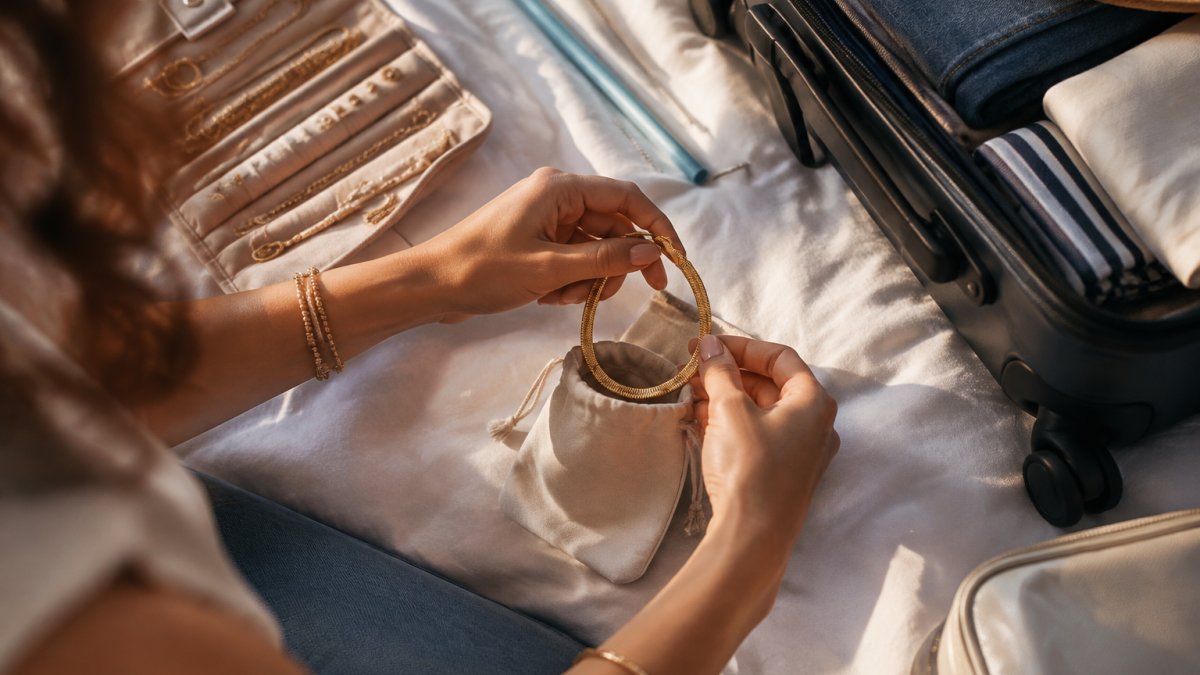
Step 1: Fasten Every Clasp Before Packing
Close the clasp on every necklace first. A closed loop holds its shape and cannot hook onto a neighbor's chain. An open clasp is a tiny hook waiting to grab.
- Fasten the fermoir fully, including any extender chain.
- Lay the necklace flat and check for twists before you coil it.
- Keep pendants facing the same direction so they do not cross the chain.
This one habit prevents most of the mess. It takes seconds and saves twenty minutes of untangling at the hotel.
Step 2: Separate, Coil and Secure Each Chain
Now coil each piece on its own and lock it in place.
- Coil the chain loosely around two fingers. Never pull tight.
- Slide the coil into a pochon individuel or a small zip pouch.
- Close the pouch before it goes anywhere near another necklace.
- For extra hold, thread the chain through a straw first, then coil.
Watch out: coiling a chain too tightly creates sharp bends that weaken fine links over time. Leave the coil loose enough to breathe.
How to Keep Necklaces From Tangling Using a Straw
The straw trick is the cheapest fix in this guide, and it works best when you match the straw to the necklace type instead of applying it to everything.
Here is the base method, then how to adapt it.
- Choose a wide straw (a smoothie or bubble-tea straw works better than a thin cocktail straw) and cut it slightly longer than your shortest chain.
- Feed one end of the chain through the straw until the clasp reaches the other end.
- Fasten the clasp so the chain forms a closed loop around the straw.
- Tuck the straw into a pouch or a compartment in your case so it cannot roll free.
Fine chains with small pendants. This is the ideal candidate. A 40-46 cm fine chain threaded through a straw stays rigid, and the pendant sits at one end instead of swinging into neighboring pieces.
Layered necklaces. Do not thread two chains through one straw. Instead, use one straw per layer and tape the straws together at both ends with low-tack tape, or slide each straw into its own compartment. Layering on a single tube defeats the separation the method is meant to provide.
Chunky beaded chokers. Skip the straw. Beads wider than the tube will not pass through, and forcing them scratches plating and can crack softer stones. A beaded choker belongs in its own pouch with a loose coil, not on a straw.
Delicate or antique chains. A straw protects against tangling but not against pressure.
Watch out: a straw cut with jagged edges can snag fine links as you thread the chain. Run a finger around the rim, or wrap the cut ends with a small piece of tape, before you feed the chain through.
The straw method costs almost nothing and takes seconds per necklace, but it is not the right tool for every piece.
Choosing a Travel Jewelry Organizer for Your Luggage
A travel jewelry organizer solves the problem at the source: separate compartments mean separate pieces. The right étui à bijoux does three things well.
- Holds shape: a firm case stops chains from shifting when the valise is handled.
- Separates pieces: individual slots or small pouches keep each necklace apart.
- Stays compact: a light, flat case slides into a sac à main or the top of a suitcase.
Look for a case with several compartiments and a soft lining. A hard outer shell protects against pressure; a soft interior protects against frottement. If you carry one or two pieces only, a small roll does the job. For a full travel capsule, choose a case with dedicated necklace slots and a separate section for boucles d'oreilles and bracelets.
Picking the Right Jewelry Pouch for Travel
A jewelry pouch for travel is the lightest option, and often the smartest. A small fabric or velvet pochon weighs almost nothing and gives each necklace its own space.
What to look for in a pouch:
- A drawstring or zip closure so the necklace cannot slip out.
- A soft inner lining to prevent rayure on polished links.
- A size matched to the piece: a choker needs a small pouch, not a large bag where it can rattle around.
Use one pouch per necklace. Stacking two chains in one bag defeats the purpose. If you are short on pouches, a small sac de congélation works as a stand-in, but fabric is gentler on gold plating.
Matching the Storage Method to Trip Length and Bag Type
The best rangement depends on how long you are away and what you carry. A weekend in a sac à main calls for something different than two weeks with a checked valise.
| Trip type | Bag | Best method | Why it works |
|---|---|---|---|
| Weekend | Sac à main | One pouch per necklace | Light, compact, quick to grab |
| 3-5 days | Carry-on | Small jewelry roll | Keeps 3-4 pieces separate and flat |
| 1-2 weeks | Checked suitcase | Hard organizer case | Protects against pressure and movement |
| Long trip, many pieces | Checked suitcase | Case plus individual pouches | Full separation for a larger collection |
For air travel, keep your most valuable pieces in your carry-on rather than checked luggage. If you are deciding which necklaces survive a flight, this guide on how to choose a necklace for air travel that arrives intact goes deeper. And if you are specifically wondering which necklace is best for carry-on luggage, that comparison covers the short styles that travel well.
Protecting Gemstones, Gold Plating and Delicate Clasps
This section covers what actually happens to each type and how to pack it so it arrives unchanged.
Gold-plated and vermeil pieces. Plating is a thin layer over a base metal, and it wears away fastest where it rubs. A plated chain coiled against a metal clasp will show dull patches after a few trips.
Sterling silver and tarnish-prone metals. Silver tarnishes faster in humid air and in contact with sulfur compounds.
Pearls. Pearls are soft and porous, and they scratch against metal and against each other. Pack pearls in their own soft pouch, never in the same compartment as chains or clasps, and keep them away from direct heat and prolonged moisture.
Gemstones. Hardness varies widely. A soft stone such as opal or turquoise scratches against harder stones and against metal, while a hard stone such as sapphire can scratch the plating or the softer pieces around it.
Delicate clasps and extender chains. A decorative closure or a fine extender chain bends under weight.
Moisture and heat. Humidity is the quiet enemy of plated and silver pieces, and heat softens some gem treatments and stresses glued settings.
Packing Your Creme Caramel Pieces for the Trip
Take the Ibiza Blue Green Aqua Choker Necklace at €78.50: genuine gemstones on a gold-plated 316L stainless steel base, water, sweat and heat proof, with a 46 cm chain. It is a short, beaded choker, so it needs its own pouch and a loose coil. The Firenze Vintage Chain Red Necklace is a short chain in the same spirit: pack it in a single pouch, clasp fastened, and it arrives ready to wear.
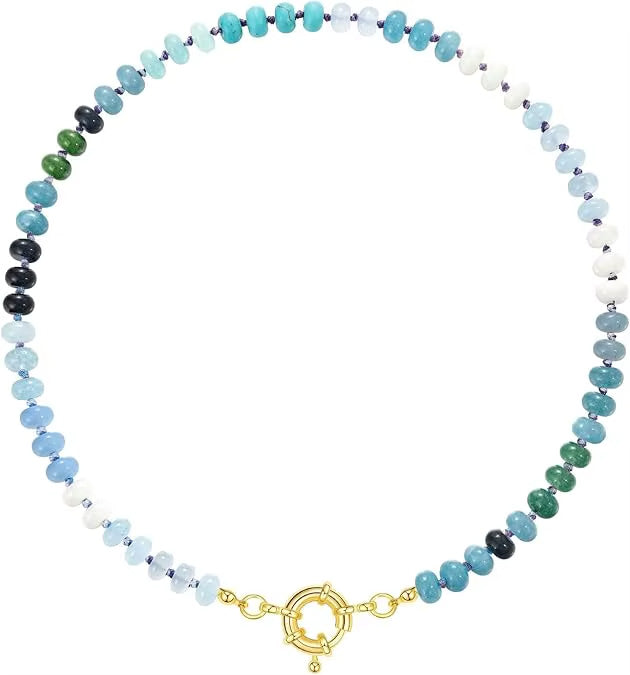
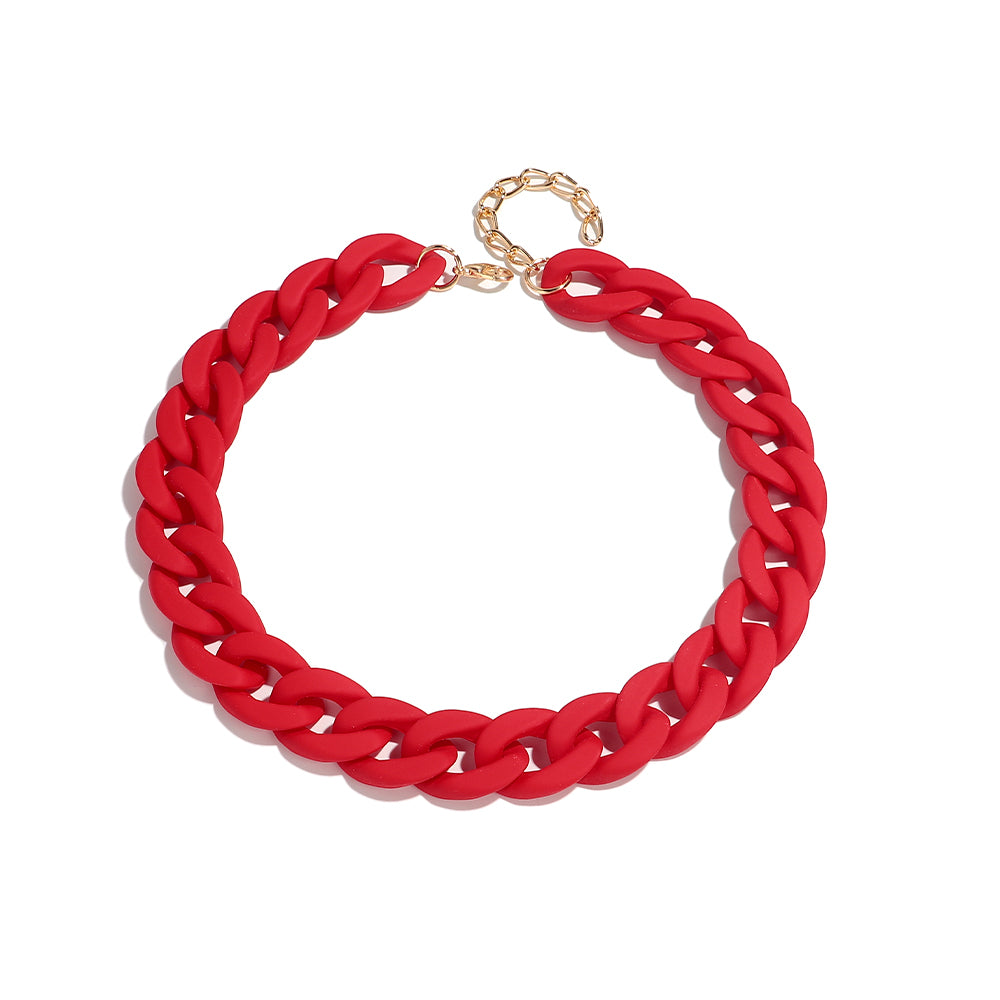
Here is how we would pack a Creme Caramel short necklace:
- Fasten the golden closure first.
- Coil the chain loosely, gemstones facing out.
- Slide it into its own pouch, one piece per bag.
- Tuck the pouch into a compartment of your case, away from hard items.
A few final habits make the whole routine stick. Unpack your jewelry the moment you arrive and hang or lay pieces flat. Wear one necklace at a time and repack it the same evening. Keep a spare pouch in your sac à main for the piece you take off during the day. Small routines like these keep a short necklace ready for every evening of the trip.
Packing a short necklace well takes five minutes and saves you a knotted mess on arrival. At Creme Caramel, we handpick short, travel-friendly pieces made with genuine gemstones and gold-plated 316L stainless steel, water and heat proof, each one arriving in a luxury gift box ready to pack or give. Browse the collection and find the choker that travels as well as it looks.
Frequently Asked Questions
How do you pack a short necklace so it does not tangle?
Fasten the clasp first so the chain forms a closed loop, then coil it loosely and slide it into an individual pouch or compartment. Short necklaces tangle because a loose end slips through the chain, so closing the loop removes that risk. Never drop two chains into the same pocket. If you are short on pouches, thread the closed chain through a drinking straw and fasten the clasp through the straw before packing.
Can you pack necklaces in a small pouch?
Yes, a jewelry pouch for travel is the simplest option for short necklaces, provided each chain gets its own pouch. Look for a soft lining such as cotton or velvet so the metal does not rub against a hard surface. A drawstring pouch also compresses flat inside a carry-on. For a choker with a pendant, choose a pouch with a little depth so the pendant does not press into the chain during the journey.
Are travel jewelry cases worth using?
They earn their place on longer trips or when you carry several pieces. A travel jewelry organizer with individual compartments and a ring roll keeps chains apart and stops earrings and bracelets from scratching necklace surfaces. For a weekend with one necklace, a pouch is lighter and takes less room. Choose a compact, rigid case if your suitcase gets compressed in overhead bins, and a soft roll if space is tight.
How should you fasten a necklace before packing it?
Close the clasp completely and check that the pendant hangs inside the loop rather than outside it. A closed loop cannot thread through itself, which is the main cause of knots. For a double-layer design such as the Dublin Clover necklace, fasten both layers and coil them together rather than separating them, so the two chains cannot cross. Test the clasp before you travel: a loose lobster claw can open inside a pouch.


