


Last Updated: November 20, 2026
Quick Summary
To choose the perfect jewelry set for cocktail parties, read the dress first: match metals to the outfit color, work around the neckline, and pick one focal piece while everything else supports it. A coordinated jewelry set works when one piece leads and the others follow in shared metal, scale and mood.
- Warm dress colors pull toward gold, cool colors pull toward silver.
- High neck or halter dresses mean skip the necklace and go big on earrings.
- A complete set usually contains one lead, one support and one or two quiet pieces.
- Earrings above roughly 5-7 grams per ear start to pull over a long evening.
- Put jewelry on last, after perfume, hairspray and lotion have dried.
Table of Contents
- Start With the Dress: Jewelry for a Cocktail Dress
- How to Accessorize a Cocktail Dress Without Overloading It
- Building a Coordinated Jewelry Set That Doesn't Compete
- Statement Earrings for Evening Wear: When They Carry the Look
- Minimalist Jewelry for Evening Outfits: The Quiet Option
- Comfort, Fit and Jewelry Care for a Full Evening
- Build Your Cocktail Set From the Creme Caramel Collection
- Frequently Asked Questions
Start With the Dress: Jewelry for a Cocktail Dress
The fastest way to choose the perfect jewelry set for cocktail parties is to read the dress first. Its color, neckline and fabric decide almost everything.
The advice always starts the same way: look at the dress before you open the jewelry box.
A cocktail dress is a short or knee-length dress worn for semi-formal evening events.
Match Metals to the Outfit Color
Metal choice is the first decision, and it is easier than most guides suggest. Warm colors pull toward gold. Cool colors pull toward silver.
- Gold jewelry: pairs with cream, camel, warm red, olive and chocolate brown
- Silver jewelry: pairs with navy blue, grey, cool pink, emerald and true white
- Mixed metals: work when the dress has both warm and cool tones
Navy blue is the classic cocktail color and loves silver or white-gold tones. A jewel-toned emerald dress also reads cooler, so silver keeps it crisp.
Some guides treat this as a hard law, but it is not.
Work Around the Neckline
The neckline decides where jewelry should sit, and where it should stay away. Match the shape of the necklace to the shape of the opening.
- V-neck: a pendant or drop necklace that follows the V
- Sweetheart: a short necklace that sits just above the curve
- Strapless: a statement necklace or bare collarbone with bold earrings
A dress neckline with a lot of detail needs less jewelry. A clean, plain neckline can carry more.
Vogue's guide to necklines and jewelry makes the same point: the dress sets the frame, and the jewelry answers it.
How to Accessorize a Cocktail Dress Without Overloading It
The key to accessorizing a cocktail dress is restraint.
Think of it as visual balance. A large statement necklace is heavy; delicate studs are light.
Try this simple sequence:
- Choose your focal piece first: necklace, earrings or bracelet
- Add one supporting piece that echoes it
- Stop before you add a third loud item
- Check the mirror from three steps back
That last step matters. Up close, everything looks fine. From across a room, you see what others see.
A common mistake is stacking a statement necklace, statement earrings and a cocktail ring together.
Building a Coordinated Jewelry Set That Doesn't Compete
A coordinated jewelry set works when one piece leads and the others follow.
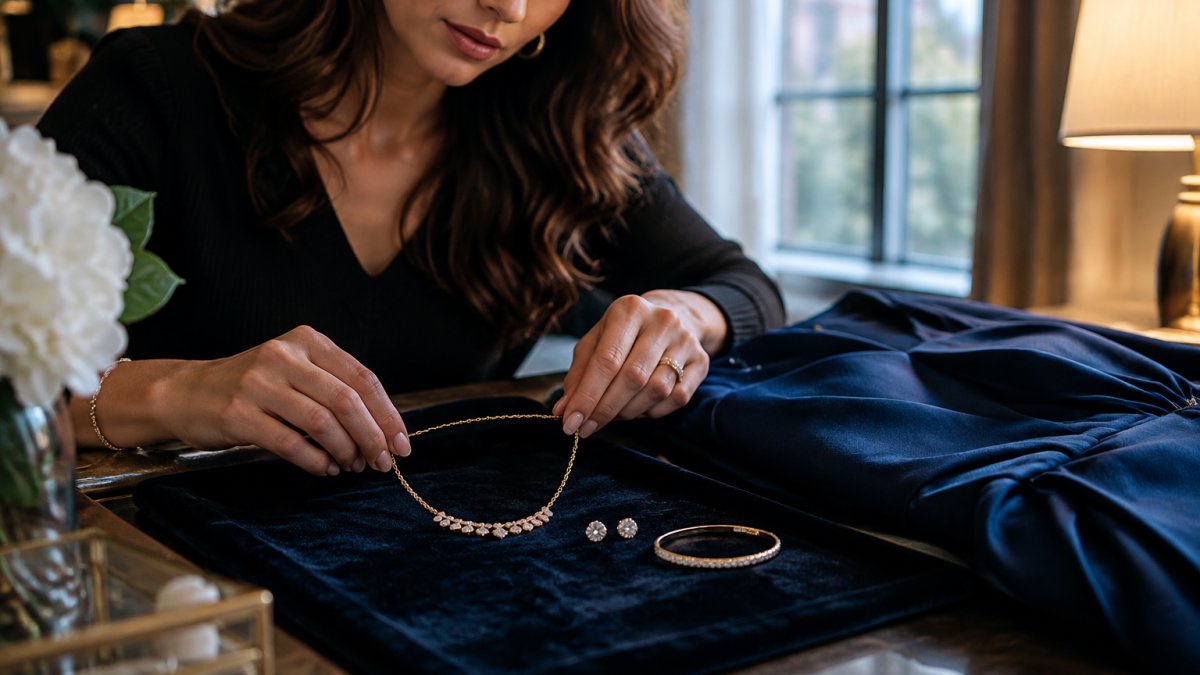
Pre-made sets solve half the problem for you. They already share a metal, a finish and a design language. What they still need is your judgment about scale.
Use a Lead-Support-Quiet framework
Instead of choosing pieces one at a time, assign each piece a role before you put anything on.
- Lead: the one piece people notice first. It carries the most visual weight, a statement necklace, bold drop earrings, or a sculptural cuff.
- Support: one piece that echoes the lead in metal and finish but at roughly half the visual weight, small studs under a statement necklace, or a fine chain under statement earrings.
- Quiet: everything else. A thin bracelet, a simple ring, or nothing at all. Quiet pieces should be almost invisible from three steps back.
A complete set usually contains one lead, one support and one or two quiet pieces. Two leads means a competing set, not a coordinated one.
Coordinate by shared traits, not matching shapes
Sets look intentional when they share traits, and dated when every piece repeats the same motif. Choose two or three shared traits and let the shapes differ.
- Shared metal and finish: all polished gold, all brushed silver, or all mixed-metal with the same tone ratio.
- Shared scale family: if the lead is large, the support should be medium and the quiet pieces small. Avoid a large necklace with large earrings and a large ring.
- Shared stone or pearl tone: keep pearls the same warmth (cream vs. white) and crystals the same color family.
A useful pattern is to treat the necklace and earrings as a pair and the bracelet and ring as a second, quieter pair. The two pairs should share metal, but only one pair should be visually loud.
Decide the lead by neckline and hairstyle
The lead piece is not a matter of taste alone. The dress and your hair decide where the eye lands first.
- Strapless, halter or high neck: the ears are the open space, so statement earrings lead and the necklace stays quiet or absent.
- V-neck, sweetheart or scoop: the collarbone is the frame, so a pendant or short necklace leads and earrings support.
- Off-the-shoulder: short chains and delicate drops share the lead; keep the bracelet quiet.
Build a set from pieces you already own
You do not need to buy a matching set to look coordinated. Lay your existing jewelry on a dark cloth and sort it into three piles: lead, support and quiet.
If you are filling a gap, buy the support piece first: they are cheaper, easier to match and do more to make an existing lead look deliberate.
Choosing One Focal Piece
Every look needs one hero. Decide whether it is your necklace, your earrings or your bracelet, then build around it.
- Statement necklace: keep earrings small and skip the bracelet
- Statement earrings: go bare at the neck or wear a fine chain
- Bold bracelet or cuff: keep the neck and ears refined
A focal piece is the item people notice first. It should sit near your face or your hands, never both at once.
Pairing Necklaces and Earrings
Necklaces and earrings should relate, not repeat. If the necklace is ornate, the earrings stay simple. If the earrings are dramatic, the necklace steps back.
For a deeper look at balancing metals, styles and necklines, our guide on how to match earrings with a necklace walks through the coordination in detail.
One insider tip: match the finish, not the pattern.
Statement Earrings for Evening Wear: When They Carry the Look
Statement earrings for evening wear take over when the dress leaves the neckline open. Strapless, halter and high-neck dresses are built for bold drop earrings.
Drop and dangle earrings add movement, which reads as glamorous under evening light. Crystals, rhinestones and pearls catch that light and throw it back.
But shape matters as much as sparkle. If you are unsure which shape suits you, our article on how to choose drop earrings for your face shape breaks it down by face shape.
Watch out: heavy statement earrings can pull on the lobe by the end of the night.
Minimalist Jewelry for Evening Outfits: The Quiet Option
Minimalist jewelry for evening outfits proves that less can read as more.
This route suits an embellished dress. When the fabric already has beading, sequins or lace, the jewelry should whisper.
- Fine chain necklace with a single small pendant
- Small studs or slim huggie hoops
- One thin bracelet or a simple ring
Minimalist pieces also travel well and work again the next morning, which is why so many women keep a quiet set as their default.
The real difference between minimal and plain comes down to finish.
Comfort, Fit and Jewelry Care for a Full Evening
Comfort decides whether you actually enjoy the night. A beautiful set you keep adjusting is a set you will never wear again. Fit and care matter as much as style, and they are where most styling guides stop short.
Test wearability before the event, not during it
Put the full set on at home, at the time of day you will wear it, and keep it on for at least an hour. Move your head, raise your arms, sit down and stand up. Most problems show up in that hour, not in the mirror.
- Clasps close firmly and sit flat against the skin
- Earring backs are secure and the weight feels balanced
- Bracelets do not slide over your hand or press on your wrist
Understand what makes a piece uncomfortable
Discomfort is rarely about style. It comes from four measurable things: weight, pressure points, clasp security and snag risk.
- Weight: earrings above roughly 5-7 grams per ear start to pull on the lobe over a long evening. If a statement pair feels heavy in the hand, plan to take them off after dinner or choose a lighter setting.
- Pressure points: a rigid cuff or a tight bracelet presses on the wrist bone. A hinge or an open-back design distributes pressure better than a closed circle.
- Clasp security: lobster clasps are more secure than spring rings for necklaces and bracelets. For earrings, screw-backs or locking backs hold better than push-backs on heavy drops.
Match materials to the evening
Look for gold-plated stainless steel with an anti-tarnish coating. Nickel-free options suit sensitive skin.
If you have a known nickel sensitivity, check the label for "nickel-free" rather than assuming a higher price means safer metal.
Care before, during and after
Care is simple, but the order matters. Put jewelry on last, after perfume, hairspray and lotion have dried.
During the event, avoid spraying perfume directly onto plated pieces and keep bracelets away from hand cream.
French consumer guidance on jewelry materials and care is a useful reference for understanding what material claims on a label actually mean.
Build Your Cocktail Set From the Creme Caramel Collection
The easiest way to get a coordinated look is to start from a set that already works together. Every set is handpicked, named after a city, and arrives in a luxury gift box.
Here is how we would choose, based on the dress you already own:
| Your dress | Our pick | Price | Why it works |
|---|---|---|---|
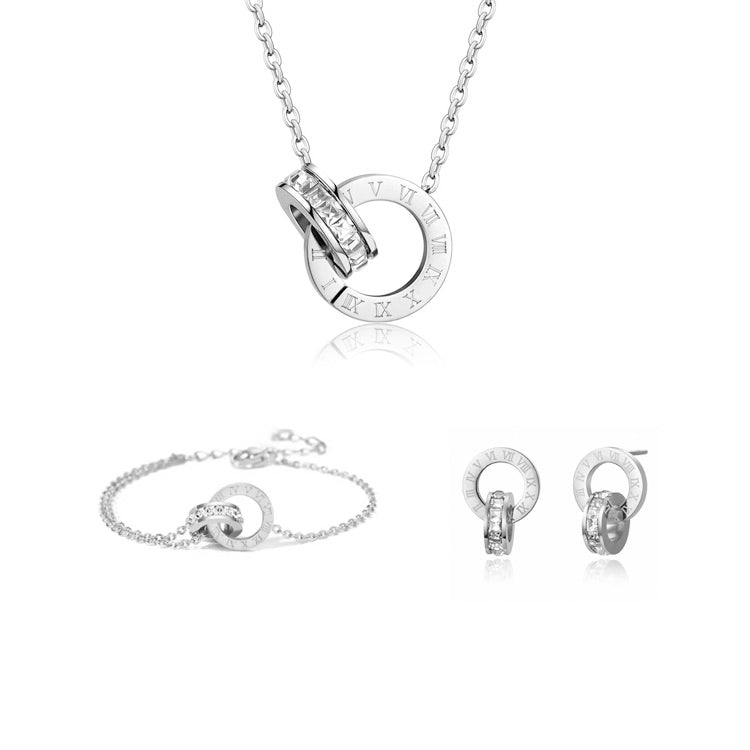
| Navy or cool tones | Paris Set Earrings, Bracelet & Necklace | €85.00 | Gold-plated stainless steel, complete three-piece set |
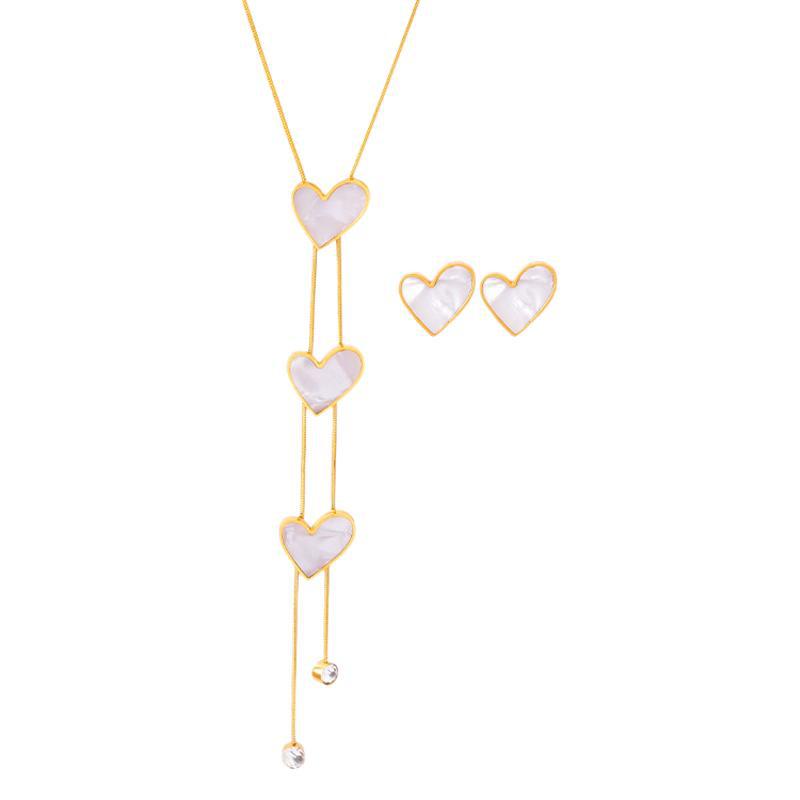
| Soft, romantic necklines | Montreal Set Earrings and Necklace | €56.00 | Heart pendants, anti-tarnish coating, nickel free |
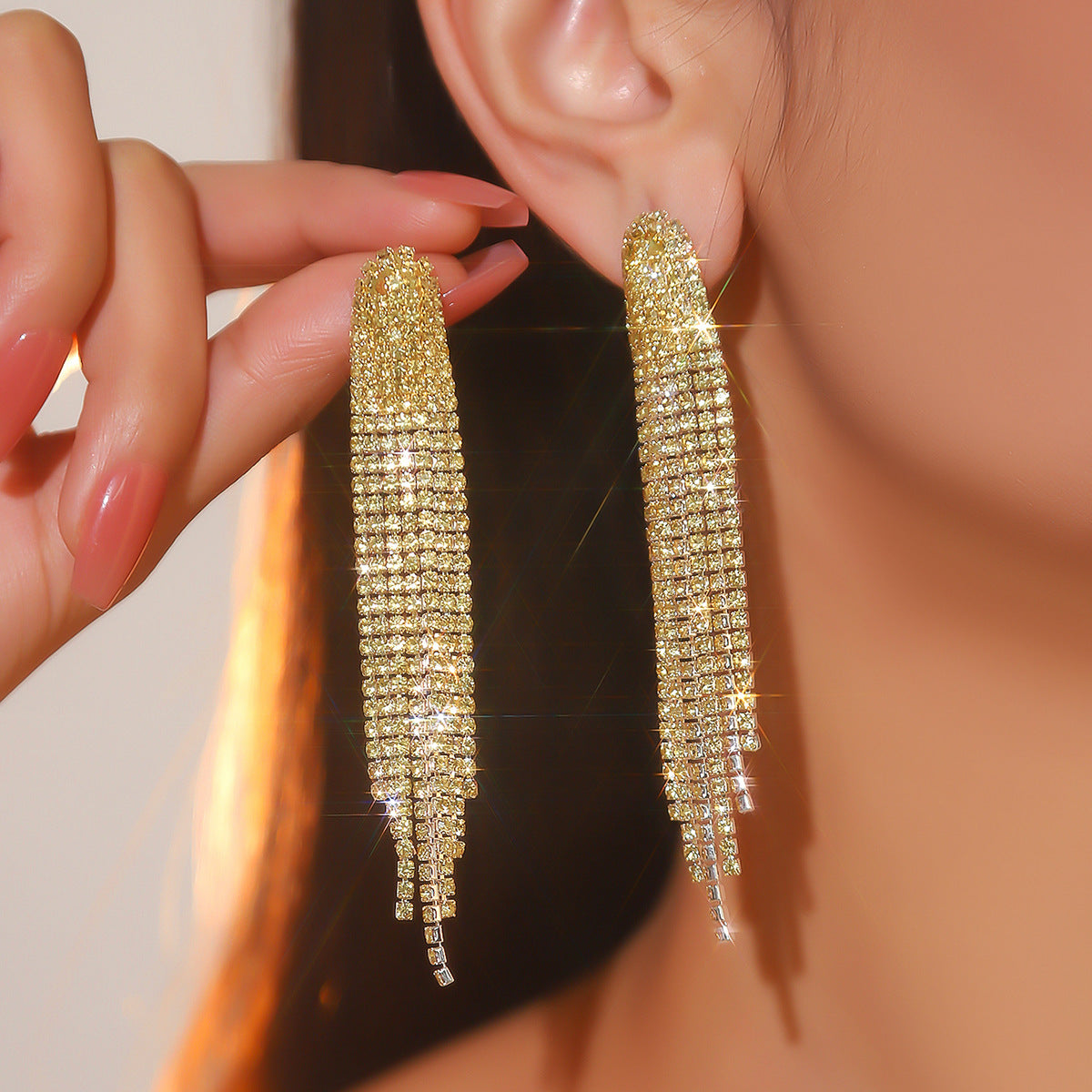
| Strapless or high neck | New York Set Earrings & Bracelet | €95.00 | Raindrop earrings carry the look, bracelet supports |
| Minimalist evening | Dublin Clover Set Necklace & Earrings | €65.00 | Fine 14K gold-plated clover set, quiet and refined |
Price
The Paris Set gives you earrings, bracelet and necklace in one box, so the coordination is done. The Montreal Set suits softer, more romantic dresses with its shell heart pendants. And the Vegas Luxury Brass Drop Earrings Set is the statement option when the earrings should carry the whole look.
Start with the dress, pick your focal piece, and let the set handle the rest.
Your next cocktail party is a chance to feel completely put together, not to spend an hour second-guessing your jewelry box.
Frequently Asked Questions
How do you choose jewelry for a cocktail party?
Start with the dress, not the jewelry box. Note the neckline, the color and whether the fabric already has embellishment. Then pick one focal piece, usually earrings or a necklace, and keep the rest quiet. A coordinated jewelry set makes this easier because the metals and scale already match. Finish by checking comfort: clasps that sit flat, earrings light enough for several hours, and a bracelet that won't catch on sleeves.
Should you match your jewelry set to your dress?
Match the metal to the outfit's undertone rather than copying its color. Gold jewelry warms navy blue, emerald and most jewel tones; silver jewelry reads cleaner against cool greys, icy blues and black. A set in one metal keeps the look intentional. If the dress is heavily embellished with crystals or rhinestones, choose a simpler set so the two don't fight for attention.
Can you wear statement earrings and a necklace together?
Yes, if you manage scale. Pair large drop earrings with a fine chain or a short pendant, and save the statement necklace for when the earrings are small studs or slim hoops. Two bold pieces at once pull the eye in different directions and break visual balance. A coordinated set designed at the same scale, like matching earrings and a delicate necklace, solves this without guesswork.
What jewelry works best with a high-neck cocktail dress?
Skip the necklace and let earrings do the work. A high neckline or halter already fills the chest area, so a pendant or chain adds clutter. Choose statement earrings, a cocktail ring or a bracelet instead. If you want a necklace, keep it short and sitting above the fabric line. This is also where a two-piece set earns its place: wear the earrings now, save the necklace for a lower neckline later.


