


Table of Contents
- Understanding Necklace Layering Lengths
- How to Layer Necklaces Without Tangling
- Step-by-Step: Creating Balanced Layered Necklace Combinations
- How to Style Gold Layered Necklaces by Neckline
- Mixing Metals, Materials, and Chain Weights
- Layering Necklaces with Elegance for Different Occasions
- Common Mistakes to Avoid When Layering Necklaces
- Frequently Asked Questions
Last Updated: October 21, 2026
Understanding Necklace Layering Lengths
Learning how to layer necklaces elegantly starts with understanding the different lengths. Each sits at a different point on your body, and knowing these measurements helps you create balanced combinations that won't tangle or overwhelm your frame.
Stack lengths strategically, not randomly, to create visual interest without clutter.
Choker and ras-du-cou lengths (30-35 cm)
A choker or ras-du-cou necklace sits close to your neck and works best as your shortest layer.
Chokers anchor your look at the top and draw attention upward to your face and collarbone.
Pro tip: A delicate choker with minimal pendants works better for layering than a chunky statement choker. You want room for other pieces to breathe.
Princess length (40-45 cm)
The princess length hits right at your collarbone, the most versatile layer because it sits at a natural focal point.
It works well as a middle layer: long enough to stand apart from a choker, short enough to avoid competing with a matinée chain.
Matinée length (50-60 cm)
Matinée necklaces drop to the middle of your chest and work beautifully as your longest layer, adding visual depth.
A matinée chain with a pendant becomes your statement piece, drawing the eye downward and balancing the shorter chains above.
How to Layer Necklaces Without Tangling
Tangled necklaces are the most common layering frustration, but preparation, strategic clasp placement, and physical separators keep chains independent all day.
A practical anti-tangle method
Follow these steps each time you layer to minimize tangling:
- Lay out and inspect. Place each necklace flat and untangled, checking for kinks or knots. A minute of separating chains prevents small twists from becoming tight knots.
- Order by length. Arrange from shortest to longest to visualize spacing and avoid overlaps.
- Fasten the longest first. Put on the longest necklace, then the next longest, then the shortest. This order reduces the chance of shorter chains catching on longer ones.
- Stagger the clasps. Fasten each clasp at a different point around the back of your neck, one at center, one slightly left, one slightly right, to distribute weight and stop clasps clustering and rubbing.
- Use a separator. Thread a small silicone or metal separator onto the chains at the back, or loosely link them with a safety pin at the nape, to keep chains parallel and prevent crossing.
- Check spacing. Leave at least 2-3 cm of visible space between chains. If two sit too close, they'll rub and tangle, adjust lengths or add an extender.
Storage and preparation before layering
Tangles often start in storage. Keep each necklace separate in pouches, boxes, or drawer dividers, and lay chains flat rather than coiling them, coiling creates memory in the metal and encourages kinks. Hang delicate chains on individual hooks.
Spacing and clasp placement techniques
The secret to tangle-free layering is giving each chain its own lane: start with your longest necklace, add shorter ones, and leave at least 2-3 cm between where each chain rests so they move independently without crossing.
Step-by-Step: Creating Balanced Layered Necklace Combinations
Building a layered necklace look requires intention. Follow these steps for effortless, elegant combinations.
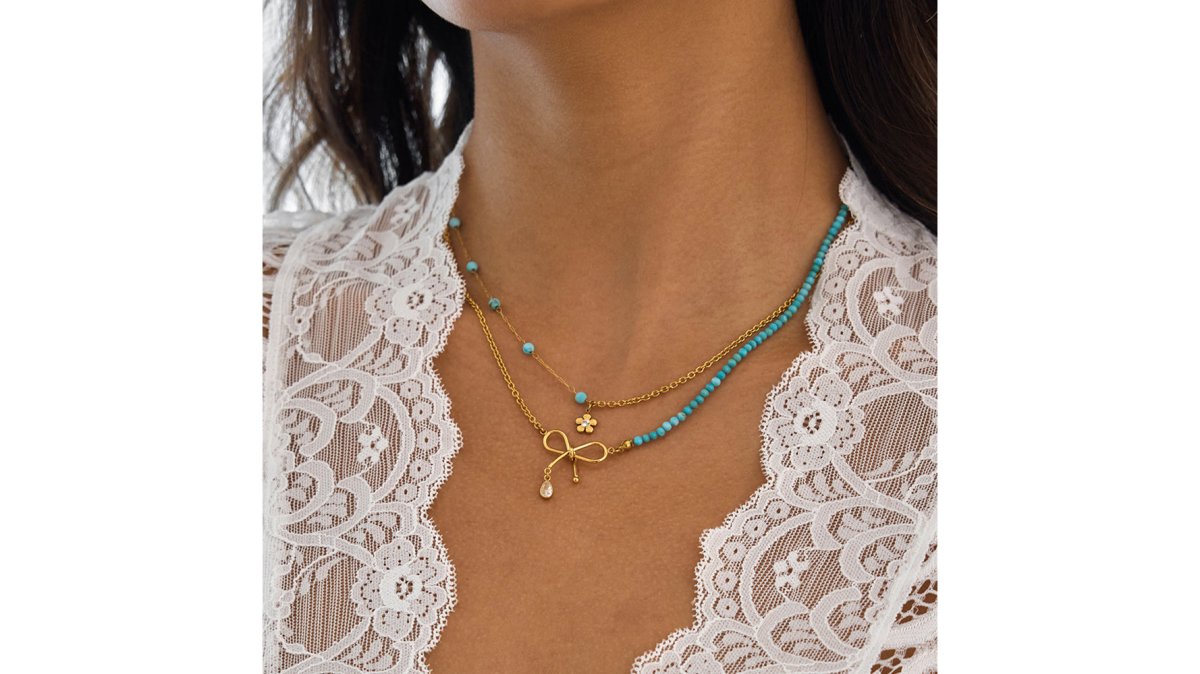
Step 1: Choose your focal piece or statement necklace
Your focal piece is the star of your layered look, usually your longest necklace or the one with the most eye-catching pendant.

It sets the tone: if it's bold and colorful, keep other layers minimal and delicate; if it's subtle, add visual interest with shorter layers.
The Santorini Double Layer Necklace Turquoise from Creme Caramel works beautifully as a focal piece. Its natural turquoise beads and handcrafted details command attention while remaining elegant.
Step 2: Select complementary delicate chains and pendants
Once you've chosen your focal piece, pick chains and pendants that complement it without competing.
If your focal piece has warm gold tones, stick with gold for other layers; if it has gemstones or bold colors, balance them with simple, understated chains.
Delicate chains work best for layering, they add visual interest without bulk. Look for thin chains with small or no pendants for shorter layers.
Step 3: Arrange by length and visual weight
Lay out your chosen necklaces from shortest to longest to see how they'll look together.
Consider visual weight, not just length: a short chain with a large pendant can feel heavier than a long, delicate one. Balance bold pieces with minimal ones.
The Ibiza Double Layered Necklace at €54.50 offers two chains you can wear separately or together. Its boho chic design and vintage-inspired resin chain provide the perfect middle layer for stacking.
How to Style Gold Layered Necklaces by Neckline
Your neckline determines how layered necklaces look, and different necklines require different approaches.
Round necklines and t-shirts
Round necklines are the most forgiving for layered necklaces, a clean canvas for stacking.
With a round-neck t-shirt, layer all three lengths: a choker, a princess-length chain with a small pendant, then a matinée chain. The layers sit naturally without competing with your neckline.
Keep pieces delicate, a round neckline handles multiple layers, but heavy chains look overdone. This is where thin gold chains shine.
V-necklines and deep décolletés
V-necklines draw attention downward. They work beautifully with longer layered necklaces because the V shape echoes the vertical line of your chains.
Skip the choker with a deep V-neckline.
A pendant in the center of your chest works especially well with V-necklines. It follows the natural focal point created by the neckline itself.
Ibiza Double Layered Necklace →
Turtlenecks and high collars
High necklines limit your layering options. A turtleneck covers your collarbone and most of your chest, leaving only the lower chest visible for jewelry.
With a turtleneck, skip the choker. Start with a princess-length chain and layer a longer matinée chain below it, both sit below your neckline and won't be hidden by fabric.
Keep layered pieces simple with high collars. Your neckline already provides visual interest, so let your jewelry take a supporting role.
Mixing Metals, Materials, and Chain Weights
Mixing metals, materials, and chain weights can look effortlessly chic or chaotic. The key is intentionality: choose a dominant metal, use others as accents, and balance visual weight. The old rule about matching metals is outdated, modern layering embraces contrast with a cohesive thread.
Mixing gold and silver
Choose one dominant metal (the one that suits your skin tone or outfit) and use the other as an accent. If gold is dominant, make two of your three layers gold and one silver, placing the silver in the middle or as the shortest layer for a subtle break. Avoid alternating metals on every layer, that looks busy. To mix more boldly, repeat the accent metal at least once so it feels deliberate.
Combining different finishes
Finishes include polished, matte, brushed, and hammered. Mixing them adds texture without bulk: a polished gold chain next to a brushed one creates depth, and a matte pendant on a polished chain draws the eye. Keep to two or three finishes per look; more can look uncoordinated.
Balancing delicate and heavier chains
Weight distribution matters for comfort and aesthetics. Use one statement or heavier piece and two delicate chains, placing the heavier piece as your focal layer (often the longest or the one with a pendant). Delicate chains above provide contrast and keep the look light. If wearing two heavier chains, separate them with a delicate one to avoid a clunky feel, and remember three heavy chains can strain the neck over hours.
Materials and textures
Mixing materials, metal chains with beads, resin, or leather, adds interest. Repeat at least one element (color, metal tone, or texture) to tie the look together: a turquoise bead necklace can pair with gold chains if the beads have gold-toned spacers or you repeat the turquoise in a small pendant. The Dublin Clover Double Layer Necklace (€110.00) features 18K gold plating and an anti-tarnish coating.

Practical trade-offs
Mixing metals can cause wear over time, silver may tarnish faster in constant contact with gold. Apply a thin layer of clear jewelry sealant to the clasp area of plated pieces, or store them separately.
Follow these guidelines to mix metals, materials, and weights with confidence, creating layered looks that feel cohesive rather than haphazard.
Layering Necklaces with Elegance for Different Occasions
The same necklaces can look completely different depending on the occasion.
Casual daytime layering
Daytime layering should feel effortless and light.
Thin gold chains work best for daytime, they catch light without drawing too much attention. Layer two or three delicate pieces and you're done.
A simple t-shirt or casual shirt becomes elevated with layered necklaces, not trying too hard, but intentional and put-together.
The Paris Set from Creme Caramel at €85.00 includes a necklace, bracelet, and earrings.
Elegant evening looks
Evening allows for more drama. Bolder pieces, heavier chains, and larger pendants all work beautifully at night.
Layer a delicate chain with a statement pendant as your focal piece. Add one more delicate chain above it for balance.
Gold layered necklaces feel especially elegant in the evening, they catch light beautifully under indoor lighting and create a luxurious impression.
Pair evening layered necklaces with a simple dress or blouse and let your jewelry be the star.
Common Mistakes to Avoid When Layering Necklaces
Even experienced jewelry lovers make layering mistakes. Knowing what to avoid saves frustration.
Mistake 1: Layering too many heavy pieces. Three delicate chains look elegant.
Mistake 3: Ignoring your neckline. A choker with a turtleneck looks awkward.
Mistake 5: Using low-quality chains. Cheap chains tangle easily and break quickly.
The ability to layer necklaces elegantly transforms everyday jewelry into a personalized style statement.
At Creme Caramel, we believe the right pieces make all the difference. Start exploring layered necklace styling today and discover how a few carefully chosen pieces can elevate your entire wardrobe.

Frequently Asked Questions
How many necklaces should you wear at once when layering?
Two to three necklaces is the ideal range for most looks. A pair works for minimalist elegance, while three creates visual interest without overwhelming the neckline. More than four can look cluttered and increases tangling risk. Start with two and add a third only if each piece has distinct length and visual weight, this maintains balance and prevents a crowded appearance.
What necklace lengths work best for layering?
Vary lengths significantly to avoid overlap. Pair a choker (30-35 cm) with a princess length (40-45 cm) and a matinée (50-60 cm) for clear separation. Each layer should sit at a different point on your chest. Avoid choosing lengths within 5 cm of each other, as they'll bunch together and tangle. Adjustable chains like the Santorini Double Layer Necklace (37-45 cm) let you fine-tune spacing for your body proportions.
How do you stop layered necklaces from tangling?
Store each chain separately and clasp them before putting them on. Use a small separator between clasps, even a thin piece of fabric works. Arrange necklaces by length before wearing, starting with the shortest at your neck. Space them evenly so chains don't touch. When removing them, unclasp in reverse order. For delicate chains, consider wearing them on separate occasions rather than simultaneously if tangling persists.
Can you layer necklaces with different metals and textures together?
Yes, mixing metals and textures creates visual depth and a curated look. Pair gold-plated chains with silver tones for contrast, or combine smooth delicate chains with textured or beaded styles like the Ibiza Double Layered Necklace. The key is balancing visual weight, if one necklace is bold, keep others minimal. Ensure all pieces share a cohesive color palette or intentionally contrast for a modern, eclectic aesthetic.


