


Last Updated: November 8, 2026
Quick Summary
A hypoallergenic necklace is one whose metals are chosen to avoid the substances that most often cause reactions, mainly nickel. Because hypoallergenic is a marketing term rather than a legal guarantee, check the base metal, the plating and a specific nickel-free statement before you buy.
- Check that the listing names the base metal, such as 316L stainless steel or titanium.
- Look for a specific nickel-free statement, not vague words like gentle or for sensitive skin.
- Plating wears over time, exposing the base metal that touches your skin.
- Take the necklace off before showering, swimming, exercising or applying perfume and lotion.
- Run a 48-hour patch test on the inner forearm before wearing a piece around the neck.
Table of Contents
- What Hypoallergenic Jewellery Really Means
- Why Necklaces Irritate Sensitive Skin
- Jewellery Materials for Sensitive Skin Compared
- How to Assess a Gold-Plated Necklace's Construction
- A Nickel-Free Necklace Buying Checklist
- Caring for Gold-Plated Jewellery to Protect Your Skin
- When to Patch Test and When to See a Doctor
- Choose Your Next Necklace With Confidence
- Frequently Asked Questions
What Hypoallergenic Jewellery Really Means
Hypoallergenic necklaces are the first thing many shoppers look for when their skin reacts to jewellery. Hypoallergenic is a marketing term, not a legal guarantee, so the label alone tells you little. A necklace is hypoallergenic only in practice when its metals are chosen to avoid the substances that most often cause reactions.
That matters because the most common culprit is nickel. A gold-plated necklace can still irritate skin if its base metal releases nickel through the plating. This guide shows you how to check any necklace before you buy.
Look for three things on the product page: the base metal, the plating thickness, and a clear statement that the piece is nickel-free. Vague words like "gentle" or "for sensitive skin" are not enough on their own.
What to look for:
- The base metal named, such as stainless steel or titanium
- A nickel-free statement that is specific, not just implied
- Plating described in real terms, not only "gold-look"
Why Necklaces Irritate Sensitive Skin
A necklace sits on a small, sensitive area of skin for hours at a time. That constant contact is why necklaces can cause problems that a bracelet or ring might not. Two main causes explain most reactions: metal sensitivity and trapped moisture.
Nickel sensitivity and contact dermatitis
Nickel is a common allergen. When skin reacts to it, the result is often contact dermatitis, a red, itchy rash where the metal touches the skin. Many people do not know they are sensitive until a piece of jewellery triggers a reaction.
Plating can hide the base metal for a while, but worn or scratched gold plating exposes what sits underneath. Once the coating thins, a metal that contains nickel can release it onto the skin.
Sweat, friction and trapped moisture
Sweat and friction also cause irritation. A chain that rubs the same spot each day can break the skin, and moisture trapped under a necklace can make a rash worse. Wearing a necklace during exercise or in hot weather raises the risk.
The key point for necklaces is simple: keep the chain clean and dry, and take it off before activities that cause heavy sweating.
Jewellery Materials for Sensitive Skin Compared
Not all metals behave the same way on sensitive skin, and the label on the box rarely tells you enough. What matters is the alloy, the mix of metals that makes up the piece, because trace elements in an alloy are what usually trigger a reaction. The table below compares the options most shoppers weigh, with the composition detail that actually affects skin contact.
| Material | Typical composition | Nickel risk | Tarnish resistance | Best for |
|---|---|---|---|---|
| Gold plating over 316L stainless steel | Thin gold layer over surgical-grade steel | Low if the steel and plating are nickel-free | Good with a protective coating | Everyday wear and layering |
| Gold plating over brass or unnamed alloy | Thin gold layer over copper-zinc or mixed base | Moderate to high, base metal often contains nickel | Poor; plating wears faster | Short-term, occasional wear |
| Solid gold, 14K or higher | 58.5% gold or more, balanced with other metals | Low, but white gold may use nickel in the alloy | Excellent | Long-term, high-value pieces |
| Titanium | Commercially pure or alloyed titanium | Very low | Excellent | Very sensitive skin |
| Sterling silver | 92.5% silver, 7.5% other metals (often copper) | Low to moderate | Tarnishes over time | Occasional wear |
A few composition points are worth knowing before you compare.
Gold purity and alloy composition. Solid gold is measured in karats, and the number tells you the gold share: 14K is about 58.5% gold, 18K about 75%, and 24K about 99.9%. The remainder is other metals added for strength and colour.
Gold-plated jewellery and its base metals. Plating is a thin layer of gold over a cheaper core. The core is the part that touches your skin once the plating wears, so the base metal matters more than the gold colour.
Nickel-free claims and how to verify them. "Nickel-free" is not a single regulated threshold in the way some shoppers assume, so treat it as a claim to check rather than a guarantee. Look for the base metal named on the product page, a specific nickel-free statement, and, where the seller provides it, nickel-release information rather than only an absence claim.
Our Roma Classic 18K Gold plated Necklace follows this pattern. It has an 18K gold plating over 316L stainless steel, is marked nickel-free, and carries an anti-tarnish coating. You can see the full details on the Roma Classic 18K Gold plated Necklace page, priced at €78.50.

If you are comparing materials in more depth, our guide to why gold-plated jewellery suits sensitive skin explains how plating and base metals work together.
Watch out: a high karat number on a plated piece describes only the gold layer, not the core, the core is what your skin meets once the plating thins.
How to Assess a Gold-Plated Necklace's Construction
Shoppers often judge a necklace by how it looks. Construction tells you more about how it will feel and last on your skin.
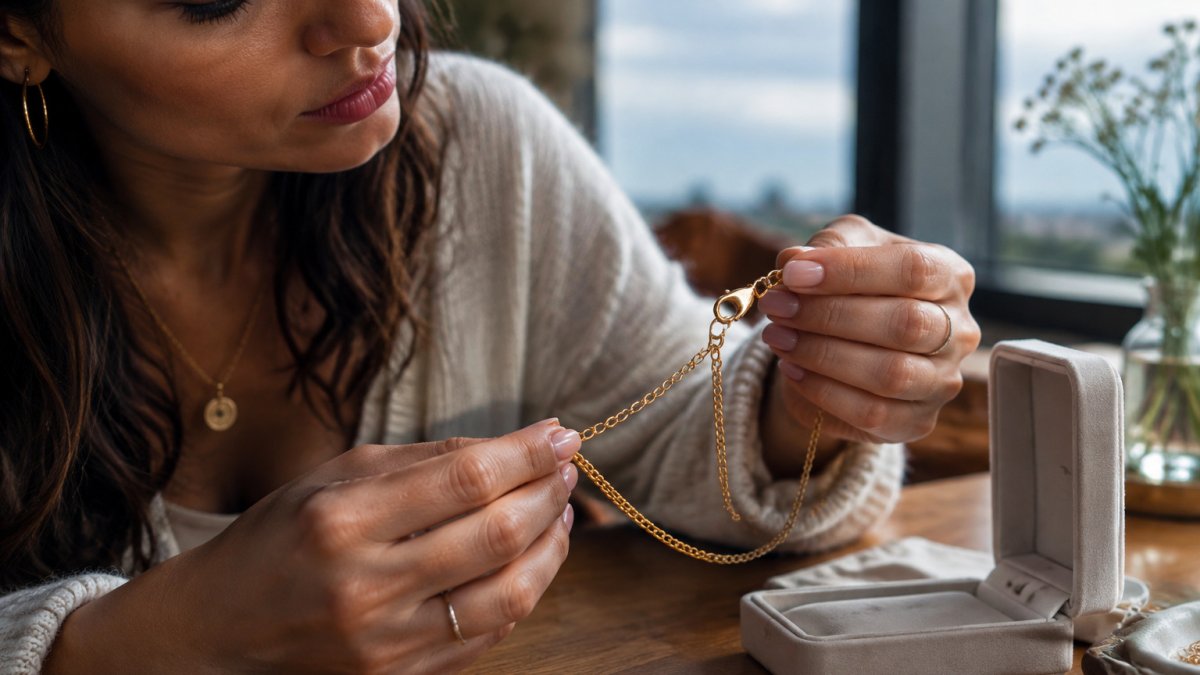
Start with the base metal. Stainless steel, titanium and other nickel-free metals are better choices than unnamed "alloy" or "brass" bases for sensitive skin. If the listing does not say what the base is, ask the seller before you buy.
Next, check the clasp and the chain. Solder points and clasps are where plating tends to wear first, and a rough or flaky edge is an early warning sign. Hold the piece in good light and look for uneven colour.
Finally, look at the protective coating. An anti-tarnish layer slows down the change in colour that happens when plating wears. Ask whether the coating is described in the product details.
For a full list of quality markers beyond the base metal, read our guide on how to tell if jewellery is good quality.
A Nickel-Free Necklace Buying Checklist
Use this checklist before you add a necklace to your basket:
- The base metal is named (for example, 316L stainless steel)
- The listing states the piece is nickel-free
- The plating is described, not just "gold-look"
- There is a protective or anti-tarnish coating
- Return or exchange terms are clear
- You know the chain length and whether it is adjustable
Chain length matters too. A 40 cm chain sits at the collarbone for most people, while a shorter chain sits closer to the neck. Choose a length that does not rub the same spot all day.
Caring for Gold-Plated Jewellery to Protect Your Skin
Good care keeps plating intact and reduces skin contact with exposed base metal. Read step-by-step cleaning for gold-plated pieces to see how to clean them without damaging the plating or irritating your skin.
Simple care steps:
- Take the necklace off before showering, swimming or exercising
- Remove it before applying perfume, lotion or hair spray
- Wipe it with a soft, dry cloth after wearing
- Store it in a dry box or pouch, away from other metal pieces
- Avoid harsh cleaners, which can strip the plating
A common mistake is cleaning gold-plated jewellery with abrasive products or soaking it for long periods. Both shorten the life of the plating. A soft cloth and mild soap are enough for most pieces.
When plating starts to wear, the base metal may show. Re-plating is possible for some pieces and can extend their life, but check with the maker first.
When to Patch Test and When to See a Doctor
Most necklace reactions are irritation rather than allergy, and the two behave differently. Irritation is a local response to friction, sweat, trapped moisture or a surface that rubs, it tends to stay where the chain sits, settles once the necklace is removed, and improves with care. A suspected metal allergy, often to nickel, is an immune response: it can spread beyond the contact point, may blister or weep, and can recur faster with each exposure.
A practical patch test. If you are unsure whether a necklace is the cause, test it on a small area away from the neck first. Place the piece against the inner forearm, tape it lightly in place, and leave it for 48 hours without washing the area. Check at 24 and 48 hours for redness, itching, swelling or a raised rash.
What to look for in product documentation. Before buying, ask the seller for the base metal, the plating description, and any nickel-release information they hold. A specific statement, for example, "316L stainless steel base, nickel-free, 18K gold plating", is more useful than a broad "hypoallergenic" label, which is a marketing term rather than a legal guarantee. If a listing gives no base metal at all, treat that as a reason to ask rather than assume.
Care and re-plating over time. Plating does not last forever. Perfume, lotion, sweat, chlorine and repeated cleaning all thin the gold layer, and once the core is exposed your skin meets the base metal directly. Wipe the necklace with a soft dry cloth after wearing, keep it away from cosmetics and water, and store it dry.
When to seek medical advice. See a doctor or dermatologist if a rash is spreading, painful, blistering, weeping, or does not improve within a few days of removing the jewellery. Seek advice sooner if you have a known nickel allergy and a reaction is worsening, or if the skin breaks and looks infected.
Watch out: a piece that passed a forearm patch test can still irritate the neck during heavy sweating or prolonged wear, because friction and moisture change how much metal reaches the skin.
Choose Your Next Necklace With Confidence
Choosing a gold-plated necklace for sensitive skin comes down to three checks: the base metal, the plating and the coating. Look for a named nickel-free base, a clear finish description, and a piece you can care for easily.
Browse the Roma Classic 18K Gold plated Necklace or see our full range of everyday fashion jewellery to find a piece that suits your skin and style.
Get the gold look you want without the irritation. Shop Creme Caramel's nickel-free necklaces and find your everyday favourite.
Frequently Asked Questions
What necklace materials are best for sensitive skin?
For sensitive skin, look for necklaces with a nickel-free base metal such as 316L stainless steel, titanium or solid gold of a high karat. Stainless steel and titanium are generally well tolerated because they release little nickel, while gold-plated pieces are a good option when the plating sits over a nickel-free base. Solid gold in 14 or 18 carats is also low risk, though it costs more. Whatever the material, check the product listing for a clear nickel-free statement before buying.
Can gold-plated necklaces cause skin irritation?
Yes. Irritation usually comes from the base metal rather than the gold layer. If the plating wears thin, or if the base contains nickel, skin contact can trigger redness, itching or a rash. Sweat, friction and moisture trapped under the chain can make this worse. Choosing a gold-plated piece with a nickel-free base and a reasonably thick plating layer reduces the risk considerably.
How can I tell whether a necklace is hypoallergenic?
No product can be guaranteed allergy-free, so treat the word hypoallergenic as a starting point. Look for a specific statement such as nickel-free and a named base metal, for example 316L stainless steel, rather than a vague label. Check the material description, and be cautious of claims that give no details. A short patch test on the skin before wearing the piece all day is a sensible step.
How do I care for a gold-plated necklace?
Remove the necklace before showering, swimming, exercising or applying perfume and lotion, since these can wear the plating and irritate the skin. Wipe it with a soft dry cloth after wearing to remove sweat and oils. Store it separately in a dry pouch so it does not scratch or tangle. Avoid harsh chemicals and abrasive cleaners. Plating wears over time, and a worn piece may need re-plating or replacing.


